


|
BoxCast Streaming BoxCast Flow BoxCast Spark Broadcaster App BoxCast Producer Third-Party Encoders |

|
BoxCast RemoteMix Compatible Mixers Mixing Station Works with BoxCast RemoteMix |

|
BoxCast OTT Apps |
|
|
BoxCast Streaming BoxCast Flow BoxCast Spark Broadcaster App BoxCast Producer Third-Party Encoders |
|
|
BoxCast RemoteMix Compatible Mixers Mixing Station Works with BoxCast RemoteMix |
|
|
BoxCast OTT Apps |
September 17, 2026 Update: This blog has been updated to reflect the product name change, from Mixing Station Anywhere to BoxCast RemoteMix.
For decades, live audio mixing required physical proximity—you had to be behind the console, regardless of its location. This physical tether often limited troubleshooting and expert accessibility. While the rise of live streaming in the 2000s introduced the need for distinct in-room and remote mixes, the real turning point came with the global shift toward remote-capable workflows.
Today, the demand for high-quality audio is higher than ever, yet the pool of available experts isn't always local. This is where things get interesting: Enter BoxCast RemoteMix.
What is BoxCast RemoteMix?
How BoxCast RemoteMix Works
Real World Use Cases
Compatible Digital Mixers
Built on a Partnership
Final Thoughts
BoxCast RemoteMix is a cloud based platform for remote live audio mixing that enables audio engineers to control digital mixing consoles in near real time from anywhere with an internet connection.
In other words, no more being physically bound to a specific board in a specific location just to mix great audio.
At its core, BoxCast RemoteMix brings professional mixer control into the cloud. Engineers can make real time adjustments for front of house mixes, live stream mixes, or both.
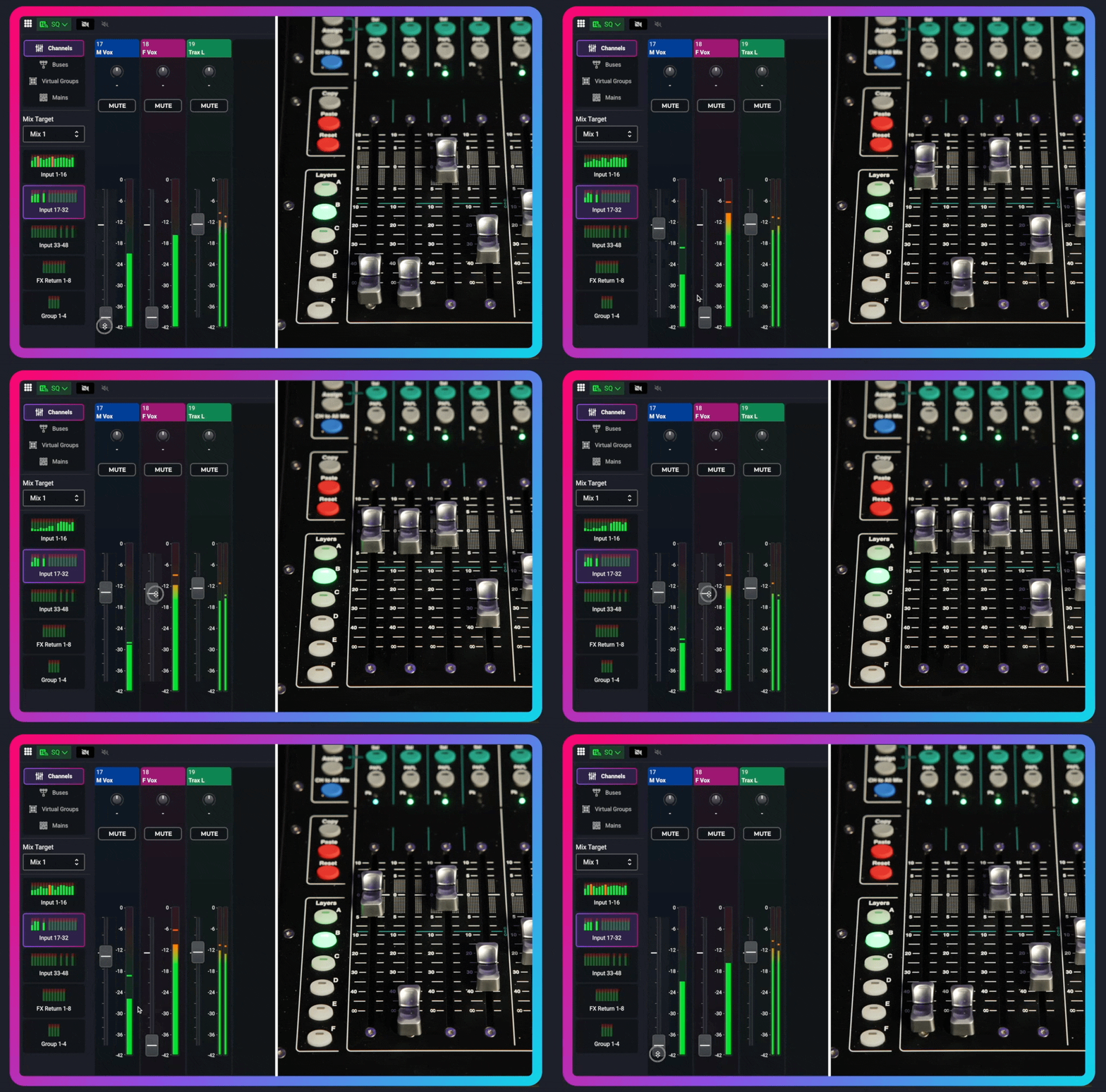
Rather than replacing existing audio infrastructure, the platform is designed to work alongside the digital mixers teams already know and trust. The goal isn’t to reinvent mixing, but to remove the physical limitations that have traditionally defined it. And in the end, both in person and online listeners benefit, which is what audio production is really about anyway.
Setting up BoxCast RemoteMix is essentially about building a secure bridge between your physical gear and the cloud. This connection relies on two key parts working in tandem: a local 'agent' that talks to your mixer and a remote interface that puts the controls in your hands. Whether you’re using dedicated hardware or a standard computer, the goal is to make the distance between the engineer and the console feel non-existent.
When choosing your agent, you can opt for a dedicated device or a software-based approach. For those already streaming with BoxCast, the Spark encoder is the ideal solution; it functions as a dedicated hardware bridge that handles your audio and video previews in a single stream, significantly reducing local system strain. Alternatively, you can achieve the same secure communication path using the BoxCast RemoteMix Software Agent—a free, lightweight application that runs on any local computer connected to your mixer.
The second component is the device you’ll be doing the actual mixing on. You have options here as well. The first is BoxCast RemoteMix's browser based interface designed specifically for mixing remotely. You can log into BoxCast RemoteMix from a browser on any computer, and start mixing without downloading a thing.
Another option is to use the original Mixing Station App—the same one most engineers already have on their devices and have used for years. Remote mixing functions exactly like the standard version you’re familiar with; BoxCast RemoteMix just enables that same reliable performance from any location.
Once connected, you can adjust preamp gain, fader levels, EQ, dynamics, routing, and other mixer parameters in real time from virtually anywhere.
You can also mix while actively watching a live video feed by connecting a camera or video source to your local agent. Having this visual preview alongside your faders makes remote mixing feel as intuitive as being in the room.
Just as importantly, control happens in near real time. Adjustments made are reflected immediately on the console, making remote mixing feel responsive and natural rather than delayed or disconnected.
Since everything runs through a standard web browser or the app, there’s no need for specialized hardware or local network access. If someone has internet access and the right permissions, they can mix.
The web interface is particularly powerful for those working across different systems, as it provides a universal control surface for any compatible digital mixer. This means you can maintain a consistent workflow on any device without needing to install specific drivers or software.
Remote audio mixing with BoxCast RemoteMix opens the door to workflows that simply weren’t possible before.
Both live stream and front of house mixes can be controlled remotely, or one mix can be handled on site while the other is mixed online. Each venue can choose what works best based on their team, audience, and physical distance between engineers and equipment.
Touring engineers and backup operators can assist live events remotely. A remote engineer can step in if an on site operator becomes unavailable. Scheduled staff can still mix shows even if travel plans fall apart at the last minute.
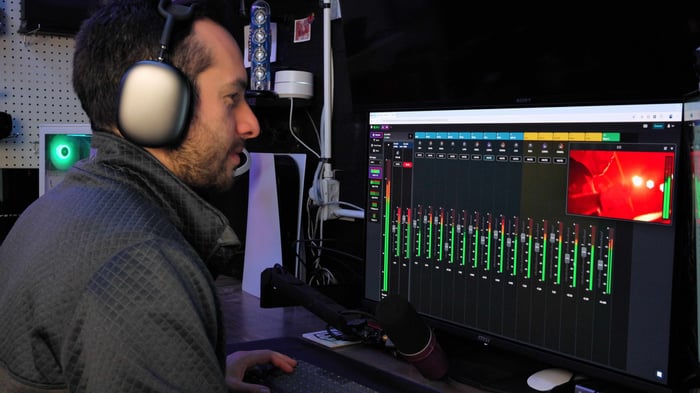
Systems integrators and AV consultants can remotely configure, tune, or troubleshoot installed systems after deployment. Managed audio service providers and multi venue operators can centralize audio control and support across multiple locations. BoxCast RemoteMix can also be used as a private training environment, allowing newer team members to mix real events without the pressure of mistakes impacting a large audience.
Overall, we’re only beginning to scratch the surface of how many ways this platform can be used.
BoxCast RemoteMix supports a wide range of digital mixing consoles from major manufacturers, with continued expansion as new mixers are released and adopted. Current compatible mixers include models from brands like Behringer, Yamaha, Allen and Heath, Soundcraft, Mackie, PreSonus, Midas, and more.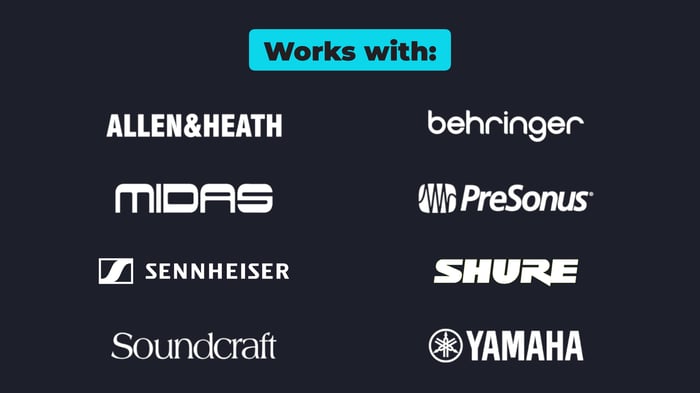
This broad compatibility is built on Mixing Station’s existing control architecture. Instead of locking users into a single hardware ecosystem, support spans entire mixer families. That makes it easier to adopt remote mixing without replacing consoles that are already doing their job well.
A full list of compatible mixers can be found here.
BoxCast RemoteMix was developed through a partnership between Mixing Station and BoxCast, and officially launched in January 2026.
Mixing Station brings years of experience building powerful, consistent mixer control software across a wide range of digital consoles. BoxCast contributes cloud infrastructure and live streaming expertise, with a platform designed to support reliable remote workflows.
Together, the partnership combines deep mixer control with cloud connectivity that’s purpose built for modern live production and streaming environments. The result is a platform that fits naturally into distributed workflows without adding unnecessary complexity.
Though it’s been this way for ages, audio mixing no longer has to be tied to a specific console in a specific room. With BoxCast RemoteMix, engineers can mix, monitor, and support live audio from wherever they’re needed.
As productions become more distributed and expectations for audio quality continue to rise, remote mixing isn’t just a convenience. It’s a practical response to how live audio and audio engineers actually work.