


|
BoxCast Streaming BoxCast Flow BoxCast Spark Broadcaster App BoxCast Producer Third-Party Encoders |

|
BoxCast RemoteMix Compatible Mixers Mixing Station Works with BoxCast RemoteMix |

|
BoxCast OTT Apps |
|
|
BoxCast Streaming BoxCast Flow BoxCast Spark Broadcaster App BoxCast Producer Third-Party Encoders |
|
|
BoxCast RemoteMix Compatible Mixers Mixing Station Works with BoxCast RemoteMix |
|
|
BoxCast OTT Apps |
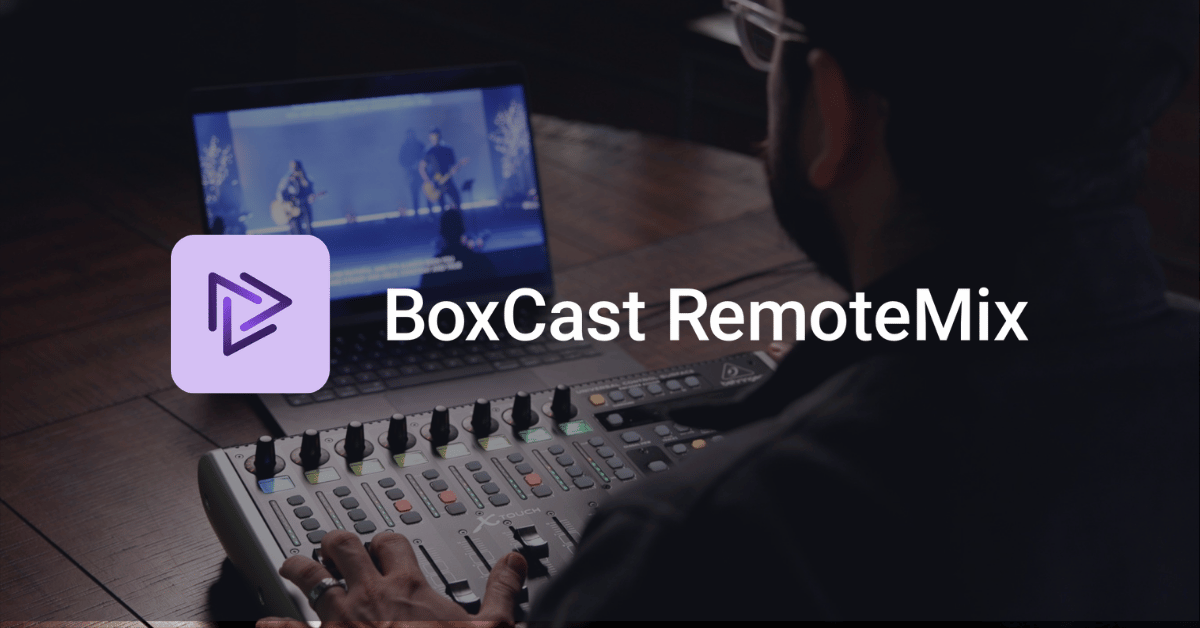
For decades, digital audio mixing followed a familiar pattern. If you wanted control of a mixer, you needed to be either standing near it, or connected to the same local network, and working from an app. That model worked fine when teams were always available to be on site.
But modern productions look less and less like this anymore.
Live events are streamed, ideal team members aren’t always available, and experienced audio engineers for hire frequently move between venues, sometimes across town on the same day. Having the right people physically close to a console is no longer a given.
That shift created a clear need. Audio engineers needed a way to control professional digital mixers from anywhere, without sacrificing their depth of control or personal standards.
That’s where BoxCast RemoteMix comes in.
What is BoxCast RemoteMix?
How BoxCast RemoteMix Works
Key Features Audio Engineers Care About
Real World Use Cases
Compatible Digital Mixers
Final Thoughts
BoxCast RemoteMix is a browser based interface that allows audio engineers to control compatible digital mixing consoles in real time from virtually anywhere while monitoring real time audio and video feeds.
Instead of relying on local network access or dedicated control hardware, engineers can open a web browser, connect securely, and mix using a consistent interface that works across different mixer brands and models.
At a practical level, BoxCast RemoteMix gives engineers direct control over core mixer functions like faders, EQ, dynamics, routing, and more. At a higher level, it removes the physical and network limitations that have traditionally defined how and where mixing happens.
You don’t need to be in the same room as the console. You don’t need to be on the same local network. And you don’t need to relearn a new interface every time you touch a different mixer.
BoxCast RemoteMix connects to digital mixers, which provides the secure cloud connection between the hardware and the browser interface.
Initial setup is done only once on site, where a lightweight application called Mixing Station Agent runs on a local computer to connect to the mixer. For Spark users, setup's even simpler, using the hardware encoder to establish the initial connection. After that, that agent or Spark bridges the console to the cloud, maintaining a live connection for all future sessions.
From there, BoxCast RemoteMix becomes the control surface. Engineers log in through a standard web browser and immediately gain real time access to the mixer. Changes made in the browser are reflected on the console instantly, without feeling laggy or disconnected.
Because the interface lives in the browser, there’s no special hardware required and no operating system limitations. If an engineer has internet access and permission, they can mix.
BoxCast RemoteMix is built for engineers who mix for a living, not merely for basic monitoring or emergency control.
The interface supports deep control over preamps, faders, EQ, dynamics, sends, and routing. Layouts stay consistent across supported mixers, which reduces friction when moving between different consoles.
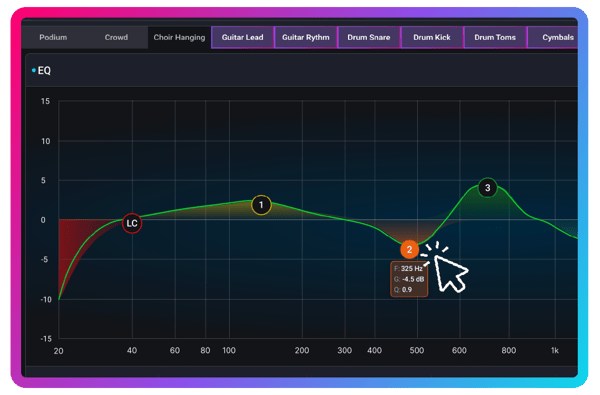
That consistency matters more than it might seem. An engineer who learns BoxCast RemoteMix once can apply that knowledge across many mixer families without starting over every time.
Because everything happens in real time through a browser with a live video feed, BoxCast RemoteMix feels responsive enough for live production, not just setup or troubleshooting. Engineers can confidently mix shows, streams, and events knowing their adjustments are applied immediately.
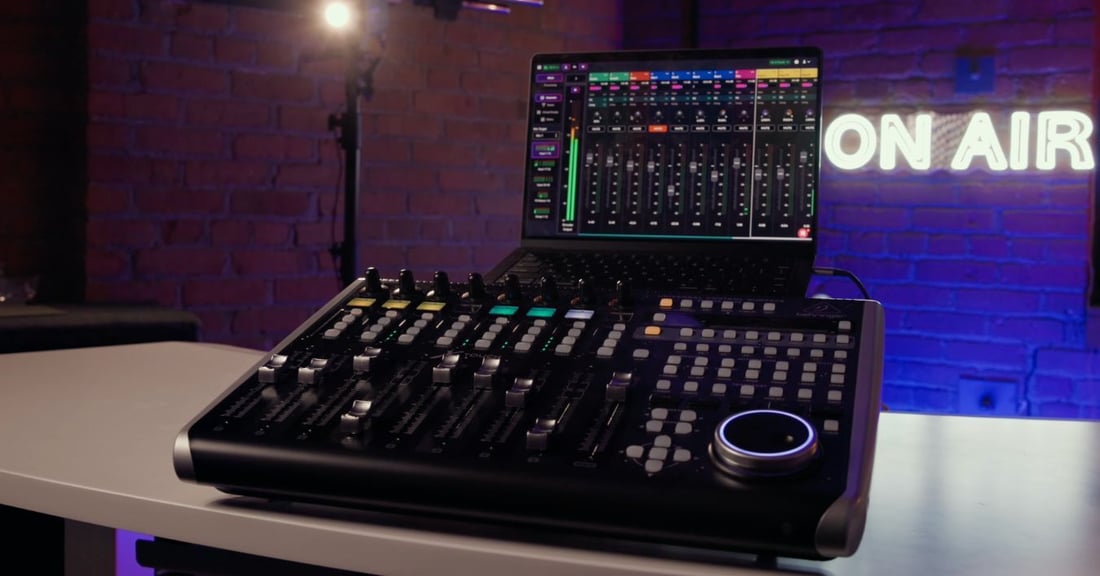
Audio engineers use BoxCast RemoteMix in a wide range of real world scenarios, and the list keeps growing.
Some teams use it to separate front of house and live stream mixes, allowing one engineer to stay on site while another mixes remotely. Others rely on it for backup coverage when a scheduled engineer can’t be physically present.
Touring engineers can now support venues remotely. Systems integrators and AV consultants can tune and troubleshoot installed systems without rolling a truck. Multi venue operators can now easily centralize audio support across multiple locations.
BoxCast RemoteMix is also used in ways you wouldn’t expect, like for training. Newer engineers can mix real events under supervision on a private feed, building confidence in mixing live events without being physically tied to the console or responsible for what actual listeners experience.
In each case, the value comes from flexibility. The mixer stays where it is, and the engineer can be where they need to be.
BoxCast RemoteMix supports a broad range of professional digital mixing consoles from leading manufacturers.
Compatible mixers include models from brands like Yamaha, Allen and Heath, Behringer, Midas, Soundcraft, Mackie, and PreSonus, with support continuing to expand as new consoles and versions are released.
Rather than locking users into a single ecosystem, BoxCast RemoteMix works across entire mixer families. That makes it easier to adopt browser based control without replacing hardware that already works well.
A full and up to date list of supported mixers can be found here.
BoxCast RemoteMix represents a clear shift in how audio engineers interact with digital mixers.
Control no longer depends on location, local networks, or specialized hardware. Instead, engineers get a consistent, professional mixing interface that works wherever the internet is available.
As live production becomes more distributed and expectations continue to rise, browser based mixer control is not just a convenience. It’s quickly becoming a practical requirement for modern live production.