



|
BoxCast Streaming BoxCast Flow BoxCast Spark Broadcaster App BoxCast Producer Third-Party Encoders |

|
BoxCast RemoteMix Compatible Mixers Mixing Station Works with BoxCast RemoteMix |

|
BoxCast OTT Apps |
|
|
BoxCast Streaming BoxCast Flow BoxCast Spark Broadcaster App BoxCast Producer Third-Party Encoders |
|
|
BoxCast RemoteMix Compatible Mixers Mixing Station Works with BoxCast RemoteMix |
|
|
BoxCast OTT Apps |
Some organizations that stream review their analytics with key stakeholders once a year. Others do it quarterly. Some review the numbers monthly, and in rare cases large teams meet weekly or after every event to discuss engagement analytics.
These discussions usually cover a wide range of data points. Teams look at where viewers are watching from, what resolution they're watching in, what devices they're using, when throughout the week they tune in, and what percentage of views happen live versus after the broadcast ends.
But regardless of how detailed the discussion becomes, there’s typically one metric that carries more weight than the rest.
Total viewership.
This number often gets compared directly to in person attendance. It helps teams determine whether the time, effort, and financial investment in live streaming is actually worth it.
But here's the problem.
Your live stream analytics are probably wrong.
If that's the case, why does it happen, and what can you do about it?
Why Live Stream Analytics are Almost Always Wrong
Is Your Live Stream Viewership Greater Than You Realize?
Final Thoughts
When most platforms report streaming analytics, "viewership" usually means the number of people watching a broadcast.
Some platforms call this viewers. Others call it views. But the basic premise sounds simple enough. How many people are watching the stream?
The problem is that's not what the metric actually measures.
In most cases, what streaming platforms are really counting is the number of unique devices connected to the broadcast. The system then shares the number of viewers, alluding that every device represents one viewer.
That assumption creates a major gap between reported viewership and actual audience size.
In reality, the number of devices watching often has very little to do with the number of people watching.
Here are a few common examples.

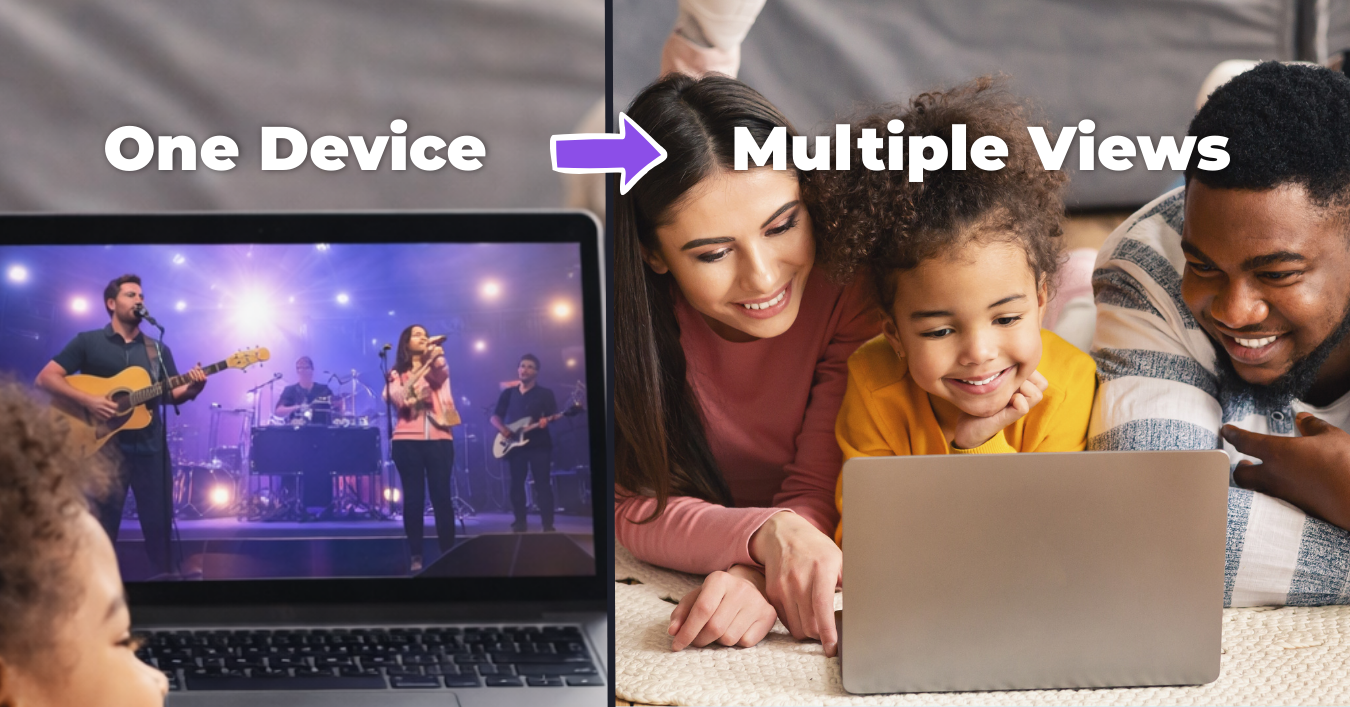
Grandparents often watch streams of family members who live far away. Parents might keep the whole family home from church if a child is sick and watch on the living room TV instead. And yes, many people do watch alone.
But when you add every circumstance up relating to families, it’s not unreasonable to assume many devices represent two to five or six people watching together.
Ticketed broadcasts have brought groups together for decades. Pay per view fights, concerts, and sporting events often turn into group viewing experiences.
Even when a stream is free, plenty of people prefer watching together instead of alone. As an introvert, the author may find this hard to believe, but there’s an entire world of extroverts out there.
When you're on the clock, you're on the clock. In many in-person organizations, meetings happen in shared spaces with a single screen.
Live streamed events are often projected onto a large display while teams gather in a large conference room. Ten, twenty, or even fifty people might watch together, yet analytics still record just one device.
When a primary event space reaches capacity, organizations often create overflow rooms or additional viewing areas on site, or even off site.
These spaces might hold anywhere from ten to hundreds of people watching the stream together. Once again, analytics only count the device delivering the video.
Streams sometimes appear in restaurants, schools, government buildings, or other public spaces, as well.
In these environments dozens or even hundreds of people might see the broadcast throughout the day, yet the analytics still report a single viewer.
These examples barely scratch the surface.
The reality is simple. Standard live stream analytics often underestimate how many people are actually watching.
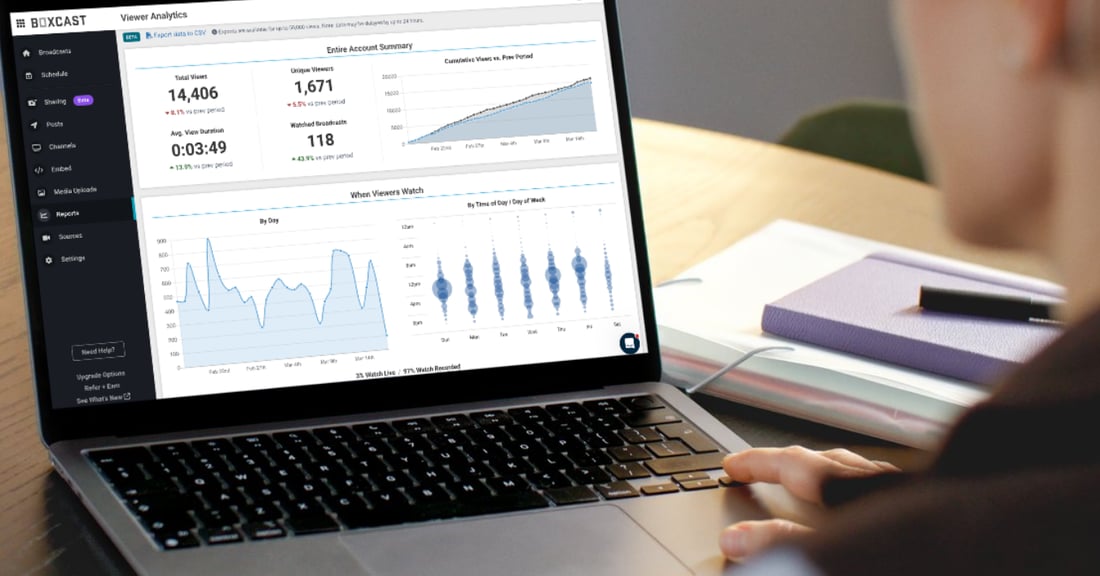
If it’s been a while, open your live streaming dashboard and take a closer look at your analytics.
Move past the sections where you schedule broadcasts or start streams and focus on the data itself. What metrics are available?
Chances are your reported viewership reflects the number of devices connected to your stream, not the number of people actually watching.
And to be clear, at BoxCast that's how we present viewership data too.
The reason is simple. There's no reliable way for a streaming platform to determine how many humans are sitting behind each device.
So if you want a better estimate of your real audience, it may take a little extra effort.
One simple approach is to survey your most engaged viewers. Ask loyal members, regular attendees, or superfans how many people typically watch with them when they tune in.
Even a small sample size can provide valuable insight. If you average those responses, you might discover that each device represents two, three, or even more viewers.
In other words, your real audience might be two to three times larger than what your analytics dashboard reports, which should certainly factor into your lead team meetings, using data points to determine how impactful and valuable your streaming effort actually is.
You're absolutely right to care about your viewership numbers. Comparing audience size against the time and financial investment in streaming is an important conversation for any organization.
Just remember one key detail when those discussions happen.
Your analytics likely show devices, not people.
Which means there's a good chance your live stream audience is significantly larger than you realize.