



|
BoxCast Streaming BoxCast Flow BoxCast Spark Broadcaster App BoxCast Producer Third-Party Encoders |

|
BoxCast RemoteMix Compatible Mixers Mixing Station Works with BoxCast RemoteMix |

|
BoxCast OTT Apps |
|
|
BoxCast Streaming BoxCast Flow BoxCast Spark Broadcaster App BoxCast Producer Third-Party Encoders |
|
|
BoxCast RemoteMix Compatible Mixers Mixing Station Works with BoxCast RemoteMix |
|
|
BoxCast OTT Apps |
Broadcasting, Live Streaming Hardware
Isn’t it wild how teenagers in the mid 2020’s generally have no idea what common tech products were from the 80’s, 90’s, and even 2000’s? Show them a cassette or VHS tape, a CD, or a floppy disk and they’re likely to physically express genuine (and visible) bewilderment.
Their world of tech is primarily contained in the little devices in their pockets. Sure, they’re using tablets and laptops at earlier and earlier ages, but overall, if you can’t download it in app form on a phone, they’re probably not too interested in it.
I know I may be making generalities here, but as a dad of a teenager and a youth group leader at my church, I think I’m generally on target.
The foundational conviction that drives all of this is a subconscious belief that intuitive and powerful software should be able to accomplish pretty much any technological task.
And here’s the thing, in a lot of instances, they’re 100% correct. But what about in the world of live streaming? When streaming took off in the early 2010s, live streaming hardware encoders were foundational to broadcasting. Shortly after, open source encoding software came to prominence. We’re a decade and a half into the world of live streaming, though. Are encoders still needed to live stream?
What is a streaming encoder?
What does an encoder actually do?
When is an encoder needed?
When isn't an encoder needed?
Final Thoughts
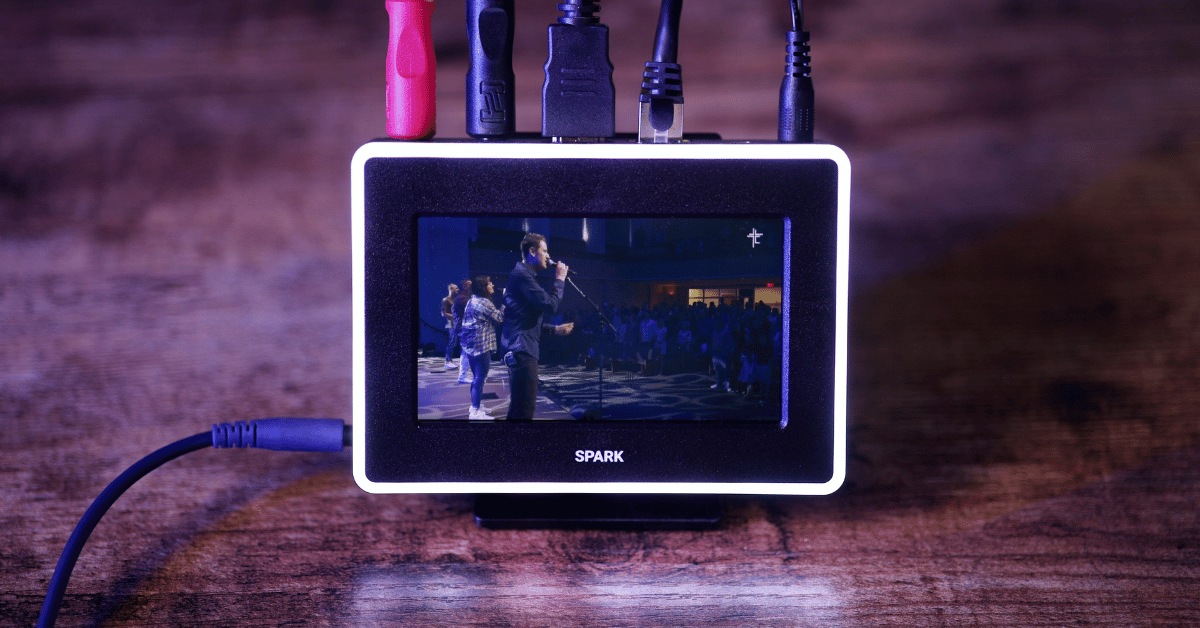
Anything that converts Audio and/or Video files into a new format so that it can be transmitted online can be classified as an encoder. Sometimes, encoders are hardware units that may fit in the palm of your hand or lock in perfectly into an equipment rack. In other instances, you’ll find them in software format, typically downloaded as a stand alone product to be used on a computer or laptop.
In some cases they can be offered for free, and in other instances they can cost anywhere from a few hundred dollars up to even around $10,000. And though they all fundamentally do serve the same high level purpose, the level to which they accomplish this task can vary tremendously. More on that in the next section.
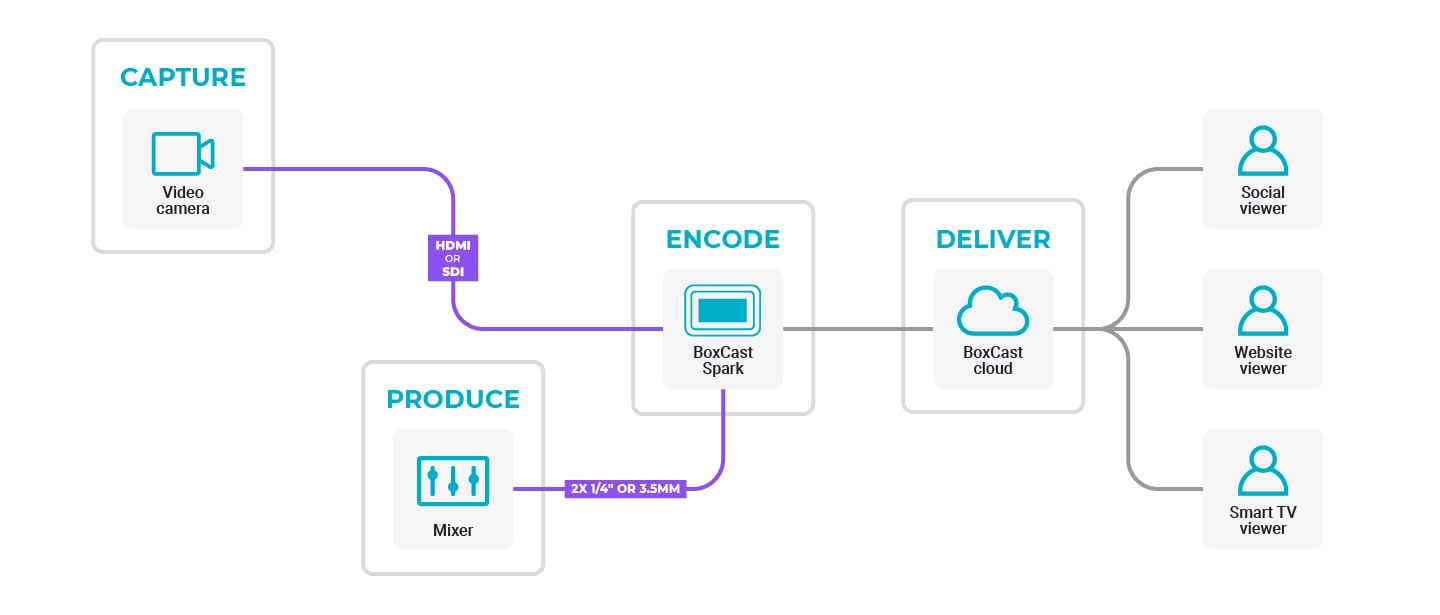
You can boil down the function of what streaming encoders accomplish and unlock into 3 primary functions: translation, compression, and transmission.
The data outputted from video cameras, video switchers, and audio mixers are fundamentally in a raw format. In other words, they aren’t in the standard language of the internet. If left in this raw state, they aren’t able to be sent and received online. Imagine being in a busy foreign country, surrounded by people who spoke a language completely unknown to you. You wouldn’t really be able to effectively interact in many ways during your trip. But if you were suddenly accompanied by a translator who took your words and flawlessly translated them to everyone you interacted with, you’d suddenly find yourself with a wide range of new possibilities. This is the same kind of game changing translation that encoding does to make live video streaming possible.
Another part of encoding has to do with making large files smaller, so that they’re able to be more efficiently moved online. Audio files are large and video files are even larger. Additionally, as higher resolution video content becomes more mainstream, the amount of data that live streaming needs to move becomes larger.
Think of video resolution in the form of weight. If Standard Definition 480p video weighs 10 pounds, then 1080p High Definition video would weigh around 50 pounds. And even more, Ultra HD 4K video would weigh around 200 pounds. So if streaming back in the early 2000s only had to move a few 10 pound weights around, now with UHD, it has to move around 200 pound weights with the same level of efficiency.
To make this happen, more advanced compression became a need to effectively turn huge amounts of video data into a smaller, more transportable file size for efficient transport during live streaming. And all of this needed to be done in a way that was lossless, so that the integrity of the video files is still preserved along the way.
Finally, after data has been turned into the correct format, and after it has been shrunk to a more practical size in a lossless way, Audio and Video content is now ready to be sent to various destinations through an optimal streaming strategy, known as a protocol.
It is a streaming protocol that maintains quality, low latency, and resilience in the face of inevitable network challenges that occur during live broadcasts. Transmission protocols, unlocked by live streaming encoding, not only help to move content to the end viewer, but tell the stream of content what to do if packets are missing or if the network speed drops below an optimal threshold. Certain live streaming encoders use standard protocols, while others come with custom protocols created specifically for the ability of the encoder, in order to give live broadcasters the best chance at streaming success.
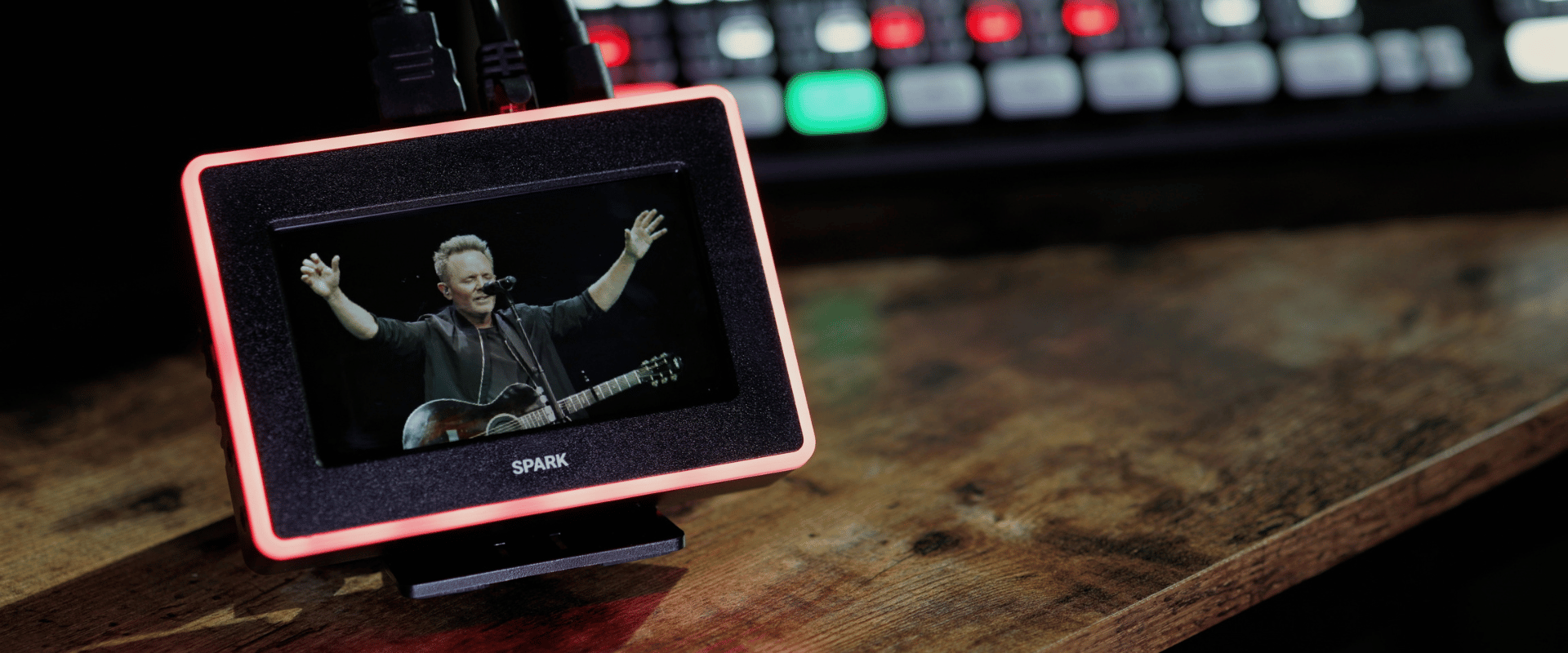
Since the foundational purpose of all encoding in live video streaming is to turn raw data into understandable code, an encoder is needed in streaming when using real production equipment. This includes any combination of cameras, mixers, video switchers, and microphones used for the live stream.
From the angle of quality, multiple cameras and a custom audio mix will help improve your streaming experience dramatically. Rather than merely sending default audio and video from a smart phone, you’re giving your viewers a tailored end to end production with close ups, wide shots, and an optimized auditory experience that actually sounds good on devices and in earbuds.
But with every piece of consumer, prosumer, or professional equipment that you use to make this advanced production happen, you’ll need to ensure that you have a quality encoder to translate your final production product into an understandable and practically transportable online format.
Technically, whether you’re the one using an encoder or not, encoding is always happening in streaming. Getting a bit more specific, if you’re streaming from a mobile app designed for streaming, the app itself is doing its own encoding behind the scenes. So though you don’t have to configure or manage it, encoding is still needed.
So when you use a webcam streaming service, video conferencing software, or a streaming app, encoding is always part of the picture, it’s just not part of your responsibility.
Organizations stream, as do individuals. Sporting events, graduations, funerals, weddings, church services, and concerts are all examples where sophisticated video and audio production are almost always needed. Thus, a streaming encoder will typically always be needed.
Other contexts call for more basic streaming setups that can be run via video conferencing software or a mobile streaming app. These are more basic productions and likely won’t need a custom managed encoder to go live.
Over the years, we’ve built over 5 different versions of live streaming encoders designed specifically to meet the needs of broadcasters who use advanced video and audio productions for their live events. We’ve also built a browser based streaming solution and a mobile streaming app for those who want to go live with a more simplistic setup.
Overall, in all of our contexts we’ve tried to help simplify the complexity of encoding, keep costs as low as possible for our encoders, and innovate with every new release so that our translation, compression, and transport help our customers achieve the best possible live stream possible. To learn more about whether or not you need an encoder for your streaming needs, feel free to set up a time with one of our live streaming experts and we’ll help you arrive at the best conclusion for your context.